
















































































































































































































MFT Gateway is a hosted Software as a Service (SaaS) solution that enables file exchange over the AS2 or SFTP protocol, without the need to install or maintain.
Start Free Trial
Stop relying on FTP and email for B2B file exchange. See how AS2-based Managed File Transfer secures your data, automates audit trails, and keeps you compliant.

Harindu Fernando
Published: 23 Mar 2026

Most enterprises don’t think too hard about how files move between their systems and their partners, until something goes wrong. A botched EDI transaction exposes customer data. An audit reveals no record of what was transferred and when. A new partner onboarding drags on for three weeks because nobody can agree on a configuration. These aren’t edge cases. They’re what happens when B2B data exchange runs on a combination of legacy FTP setups, shared drives, and “just send it over email.”
Managed File Transfer (MFT) exists to fix that, not as a theoretical framework, but as a practical answer to problems organizations run into constantly. The question isn’t really whether you need a better approach to file exchange. It’s whether you want to figure that out before or after something forces your hand.
Read more: What is MFTaaS: A Beginner’s Guide to Managed File Transfer as a Service
Most compliance conversations start with encryption. That’s fair, but it’s not the whole problem. The bigger risk in many organizations is visibility, or the absence of it.
When employees transfer files through unauthorized tools, IT doesn’t know it’s happening. There’s no log, no delivery confirmation, no way to verify a file arrived intact. If a regulatory body asks you to prove what data left your systems last quarter, you’re piecing together email threads and hoping the answers hold up under scrutiny.
Read more: AS2 EDI Message Retries: Ensuring Reliable B2B Transfers
Regulations like HIPAA, GDPR, SOX, and PCI DSS don’t just require encryption. They require documentation. They require proof that you knew what was moving through your systems and that it was handled correctly at every step. The financial penalties for getting this wrong are real, and the reputational fallout often stings longer than the fine itself.
Fragmentation is the other problem, and it tends to be more widespread than organizations realize. Large enterprises routinely discover during audits that different departments have been using different tools to share files with partners. Nobody approved it. Nobody tracked it. This is shadow IT in practice, and it’s harder to clean up than most people expect, because the workarounds were created for a reason. The official process was too slow, too complicated, or too hard to get approved. Removing the workaround without addressing the underlying friction just means the same behavior resurfaces under a different tool name six months later.
There’s also the human factor. Staff turn over. The person who set up that FTP connection three years ago is gone, and nobody documented the credentials or the logic behind the configuration. You’re one system failure away from discovering that a critical partner integration was essentially held together by institutional memory that no longer exists at your company.
Read more: Risks of Aging File Transfer Protocols & MFT Solutions
A proper MFT platform puts all B2B file exchange through one managed system. Every transfer gets logged automatically: delivery confirmations, file integrity checks, sender and receiver verification. When auditors show up, that record already exists, nobody has to compile it from memory or reconstruct it from scattered logs.
For organizations using AS2, the details matter more than people often expect. AS2 is the standard protocol in retail, healthcare, and automotive because it provides end-to-end encryption with built-in message authentication. But setting it up correctly requires more than just running a server. You need proper certificate management, MDN acknowledgements configured to your partners’ specific requirements, and audit logs that satisfy both internal reviewers and external regulatory bodies.
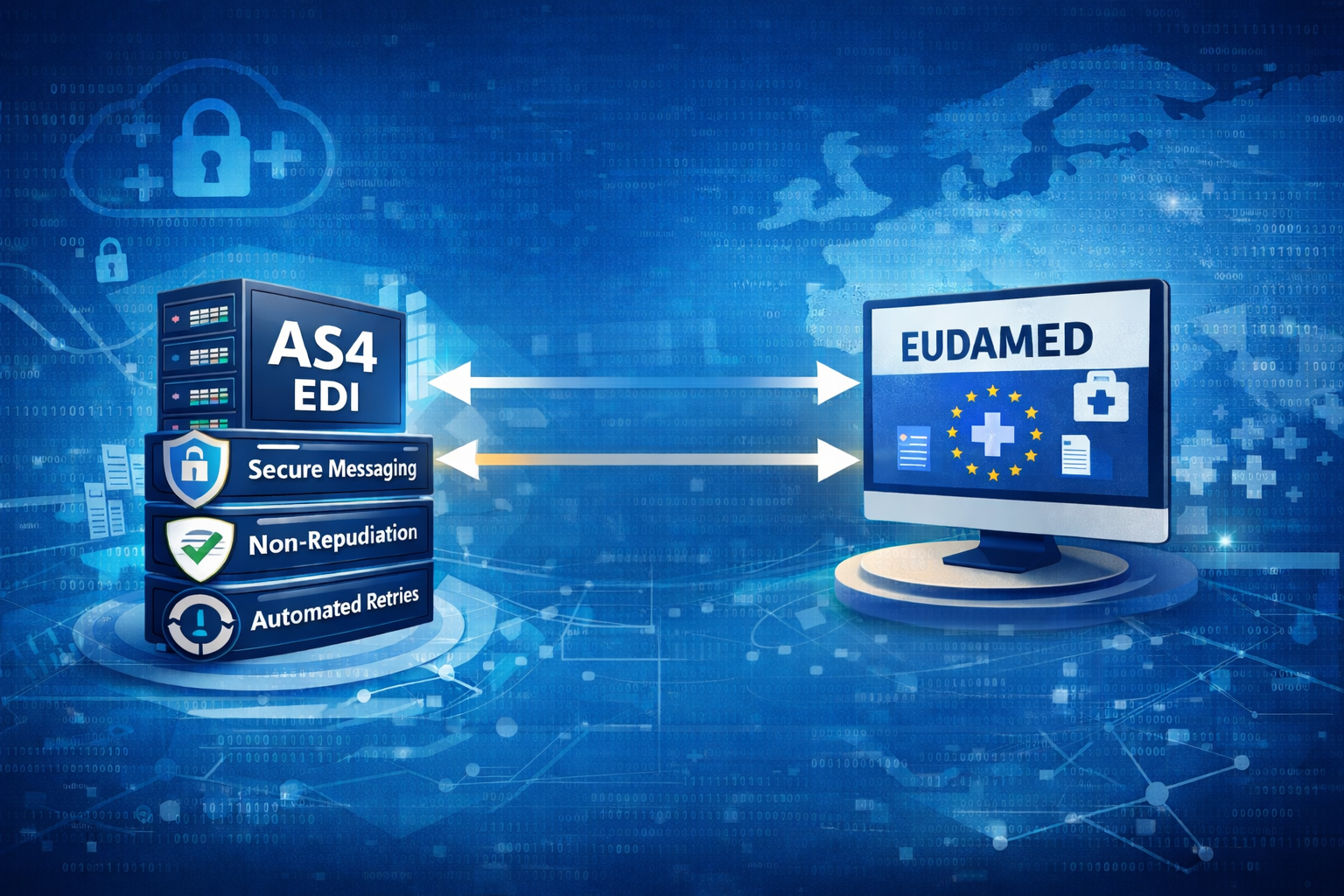
Aayu Technologies’ AS2 and EDI gateways are built around exactly these requirements. Each transaction generates a timestamped record: who sent it, who received it, when it arrived, whether the file was altered in transit. For FDA submissions, healthcare claims, or supply chain transactions, that documentation is already there when you need it, without anyone scrambling to produce it under pressure.
The compliance benefit is genuine, but it’s almost secondary to the operational one. When you have confirmation that a file was delivered, you stop chasing partners to ask if they received it. When your audit trail builds itself automatically, you stop treating the audit season like a fire drill. That shift from reactive to routine is where most of the day-to-day value actually lives.
Read more: Two-Way TLS (mTLS) 2026: Secure MFT Gateway Connections
Partner onboarding is consistently underestimated. In theory, connecting a new trading partner via AS2 follows a defined, documented process. In practice, it turns into a two-week email chain involving IT teams on both sides, certificate exchanges that get lost in inboxes, and configurations that are slightly wrong in ways that only surface during a live test, usually at the worst possible moment.
Aayu’s platform cuts that cycle significantly. New partners can be set up in minutes rather than days, not because the protocol is being oversimplified, but because the workflow around it is cleaner. Certificates live in one place. Settings get validated before you go live. Errors show up in plain language rather than buried in cryptic log files that require a specialist to interpret.
For organizations managing dozens or hundreds of trading partners, this changes the operational math considerably. B2B integration stops being a chronic bottleneck that delays new business and starts being a routine task that gets handled without much fuss. That’s the kind of change that doesn’t show up dramatically in any one transaction but compounds into real efficiency gains over a year.
Find the MFT Gateway Guide here.
There’s no universal right answer on deployment architecture, and anyone who tells you otherwise probably hasn’t talked to enough different types of organizations.
Some companies need a cloud-based SaaS setup, fast to provision, no infrastructure to manage internally, scales with transaction volume without anyone having to submit a hardware request. It’s the right choice when speed to deployment matters and when the compliance requirements don’t specifically mandate data sovereignty controls.
Others have requirements that make a dedicated server the only option the security or legal team will approve. “It’s encrypted on someone else’s server” is not a sufficient answer in every regulated environment, particularly in healthcare, government contracting, and financial services. For those organizations, full control over where data lives and who has access to the underlying infrastructure isn’t a preference, it’s a requirement.
Aayu offers both, plus hybrid configurations for organizations that need something in between cloud-managed orchestration with specific data residency controls, for example. The dedicated AS2 server option gives you complete visibility over your data without relying on shared infrastructure. Pricing is based on actual usage rather than a flat subscription, which matters when your transaction volumes are seasonal or vary significantly by quarter.
Read more: Choosing On-Premises vs. Cloud File Transfer
Kicksaw, a system integrator working across enterprise clients, used Aayu’s platform for FDA-regulated EDI submissions. FDA compliance requirements are specific and unforgiving: the documentation has to be complete, the file formats have to conform exactly, and every transaction has to be fully traceable. Their team’s takeaway was that Aayu’s domain expertise with FDA requirements made the rollout straightforward, which, if you’ve worked on any compliance-heavy technology implementation, you know is not the default outcome.
Read the Kicksaw Case study here.
That domain knowledge shows up in the details. Configuring an AS2 server to run isn’t technically difficult. Configuring it correctly for a specific regulatory context knowing what logging granularity FDA reviewers actually expect, or what your larger retail partners require in their MDN confirmations is where general-purpose solutions consistently fall short. Experience with the specific compliance requirements of your industry isn’t something you can bolt on after the fact.
Most organizations upgrade their file transfer infrastructure reactively: after a compliance finding, after a data incident, after an audit that surfaces gaps nobody knew existed. That’s an understandable pattern. Replacing working infrastructure, even imperfect infrastructure, requires organizational will that’s easier to generate after something breaks than before.
But the cost of waiting isn’t always obvious until it arrives. A data breach involving partner-facing file transfers can trigger penalties, contract reviews, and partner notification requirements simultaneously. An audit finding that your file transfer logs are incomplete or non-existent doesn’t just result in a fine, it calls into question every other compliance control you have.
The alternative is to look at your current setup and ask a straightforward question: can you produce, right now, a delivery confirmation and an integrity log for a file your team sent to a trading partner last month? If the answer involves checking three different systems, asking two different people, and still not being fully certain of the result, that’s worth paying attention to.
Aayu offers a 30-day free trial, no credit card required. Enough time to configure trading partners, run live connectivity tests, and see what automatic audit logging actually looks like in practice. If what you find confirms your current setup is solid, you’ll have that assurance. If it surfaces gaps, better to find them on your own terms than during an external review.
Join hundreds of organizations already taking full control of their B2B AS2 communications with our trusted solutions. Contact us today to tailor a solution that fits your specific AS2 EDI needs.
No commitment, all value. Try the AS2 Solution Risk-Free and discover how our solutions can transform your business workflows. No credit card required.