














































































































































































































MFT Gateway is a hosted Software as a Service (SaaS) solution that enables file exchange over the AS2 or SFTP protocol, without the need to install or maintain.
Start Free Trial
AS4 vs Managed File Transfer explained. Learn how AS4 protocol, AS4 EDI, and MFT software solutions differ for secure enterprise data exchange.

Thanura Jayatissa
Published: 09 Feb 2026

Compare AS4 protocol vs Managed File Transfer Solution. Learn how AS4 protocol, AS4 EDI, AS4 server, and MFT software differ for secure enterprise file exchange.
As organizations exchange increasing volumes of business-critical data secure and reliable file transfer has become critical. While many enterprises have adopted AS4 for structured EDI communications, others prefer a more general managed file transfer solution that can handle multiple data formats and protocols.
This is often the source of confusion when comparing AS4 protocol vs. MFT solutions. AS4 is a powerful communication standard; however, it was never designed to manage all enterprise file transfer needs. MFT platforms go beyond protocol-level communication and include central control, visibility, and automation.
This blog explains what AS4 is, how it works, what Managed File Transfer offers, and how organizations can decide which approach best fits their integration strategy.
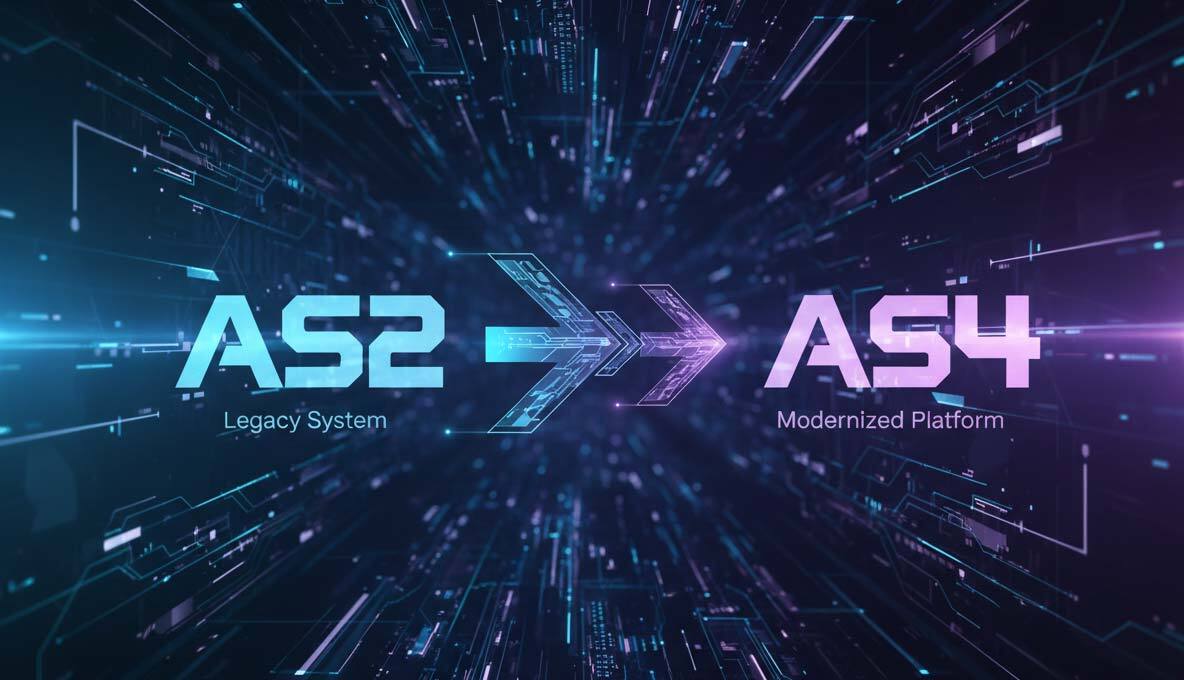
AS4 is a modern, secure messaging standard used primarily for electronic data interchange. It is based on web services and uses SOAP messaging over HTTP or HTTPS. The AS4 communication protocol was designed to replace older EDI transport standards by providing stronger security, reliability, and interoperability.
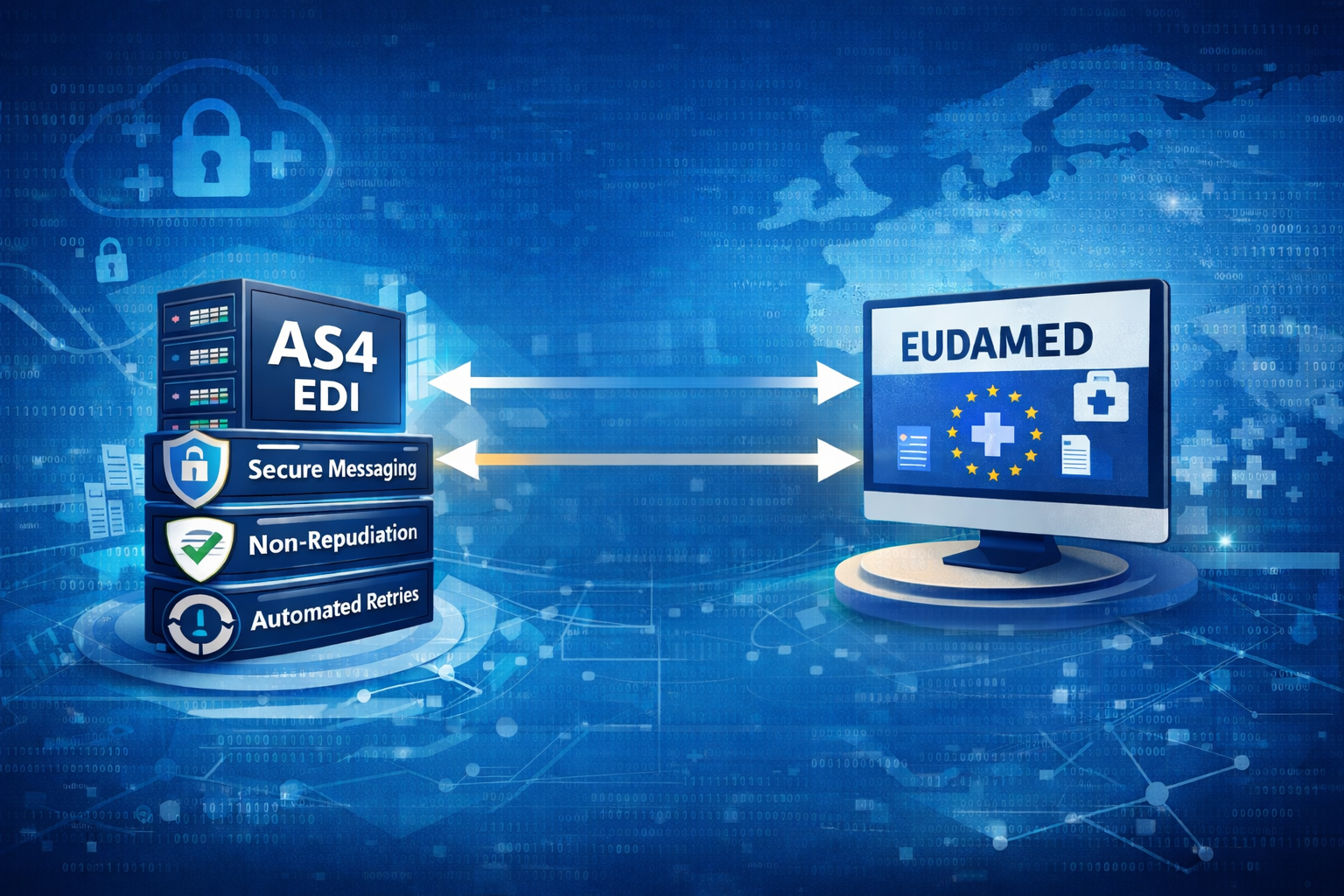
AS4 supports encrypted and signed message exchange between trading partners. This ensures data integrity, authentication, and non-repudiation. Because of these features, AS4 EDI has become widely adopted in regulated industries and cross-border trade networks.
An organization typically deploys an AS4 server to manage outbound and inbound message exchanges. This server handles encryption, message packaging, acknowledgments, and error handling according to AS4 standards.
To explore AS4 in greater technical depth, including security mechanisms and implementation models, refer to our complete AS4 protocol guide.
Implementing AS4 connectivity involves several technical components that work together to enable secure messaging. These components focus mainly on communication rather than operational file management.
Key elements of an AS4 environment include:
While the AS4 protocol is robust for message exchange, it does not manage scheduling, transformation, monitoring dashboards, or multi-protocol routing by default. These limitations often require additional tools around the AS4 server.
Managed File Transfer (MFT) is an enterprise-grade method for securely moving files between internal systems, business partners, and cloud platforms. Instead of relying on individual transfer protocols, MFT provides a centralized way to control, monitor, and automate file exchanges across the organization.
A modern Managed File Transfer Software solution goes beyond basic file movement. It combines strong security, automation, monitoring, auditing, and alerting into a single platform. This allows teams to transfer both structured EDI messages and everyday business files with confidence.
An MFT gateway acts as the central hub for all file movement. It connects applications, cloud services, and external trading partners through multiple protocols, all managed from one interface. This reduces complexity and eliminates the need to maintain separate tools for each connection.
Key capabilities of managed file transfer include:
Modern MFT solutions are designed to support many protocols simultaneously. This flexibility allows enterprises to avoid deploying separate systems for each communication standard.
Most Managed File Transfer software platforms support:
Instead of replacing protocols like AS4, an MFT platform manages them within a unified operational framework.
Read more: How to Evaluate MFT Solution Vendors
The debate between AS4 and Managed File Transfer is not a comparison of security, both are exceptionally secure, but rather a comparison of scope and operational control.
First, AS4 is simply a communication protocol. It acts as the “digital handshake” or “secure envelope” used to transmit EDI data from point A to point B. AS4 is highly effective at ensuring messages are encrypted, signed, and delivered with a non-repudiable audit trail.
In contrast, a Managed File Transfer solution is enterprise-class software. To break it down, you can compare AS4 to being concerned only with the “how” of a file transfer. An MFT solution will concentrate on the “who, when, and where” of multiple simultaneous file transfers. An MFT gateway integrates not only AS4 but also SFTP, APIs, and cloud connectors. This gives organizations a complete view of all file transfers, something a standalone AS4 server cannot provide.
One of the most significant differences lies in what happens after the file is sent. With a standard AS4 deployment, monitoring is often limited to technical logs, if a transfer fails, a developer may need to investigate the cause.
MFT solutions solve this by providing “single pane of glass” visibility. They offer real-time dashboards that business users can understand, coupled with advanced automation. If an AS4 transfer fails due to a network glitch, an MFT platform can automatically retry the transfer, alert the relevant team, and log the incident for compliance, all without human intervention.
If your company simply requires the exchange of EDI with only a couple of major partners in a certain sector (for example, energy or government), then an AS4 server that is dedicated might be sufficient. However, once the partner network expands and the internal systems become more complex, managing isolated protocol systems becomes a major operational challenge.
It is at this point that the MFT strategy wins. It consolidates your security policies, certificates, and partner onboarding. Rather than having an AS4 server, an SFTP server, and manual scripts for cloud uploads, you have the MFT platform functioning as a universal translator that is capable of expanding along with your business.
| Feature | AS4 Connectivity | Managed File Transfer (MFT) |
| Primary Goal | Secure, reliable EDI messaging. | End-to-end file lifecycle management. |
| Core Strength | Protocol-level security & non-repudiation. | Operational control & visibility. |
| Monitoring | Technical logs. | Centralized dashboards & real-time alerts. |
| Flexibility | Purpose-built for AS4 messages. | Supports AS4, SFTP, FTPS, HTTPS, & Cloud. |
| Automation | Basic triggers. | Complex, multi-step workflows. |
In some scenarios, a standalone AS4 setup is sufficient. Organizations with limited partner connections and strict EDI requirements may prefer direct AS4 communication.
AS4 alone may be suitable when:
In these cases, deploying an AS4 server with standard configuration can meet compliance requirements without extra complexity.
While AS4 is technically strong, it has operational limitations.
Common challenges include:
As file volumes grow, teams often struggle to maintain multiple AS4 instances across business units. This is where Managed File Transfer becomes necessary.
A managed file transfer solution is ideal for organizations that exchange data across many systems and formats. MFT becomes the better choice when:
With Managed File Transfer software, teams manage all transfers from one interface instead of maintaining protocol-specific tools.
In modern integration architectures, the choice is rarely AS4 or MFT. Most enterprises use AS4 within a Managed File Transfer platform. This hybrid approach allows organizations to retain AS4 compliance while gaining operational control.
Benefits include:
Many organizations already use MFT platforms to manage AS2 software connectivity. AS4 is increasingly being added to these environments as regulatory requirements evolve.
Aayu Technologies’ MFT Gateway currently provides enterprise-grade AS2 capabilities. For one customer, the platform was customized to support AS4 connectivity and deployed within their AWS region to meet regional compliance requirements.
Based on growing demand, native AS4 support will be integrated into the SaaS MFT Gateway roadmap. This will allow customers to manage AS2 and AS4 communication from a single managed file transfer platform.
Both AS4 and Managed File Transfer focus strongly on security, but they operate at different levels. AS4 is designed to protect the communication itself. It uses message encryption, digital signatures, and non-repudiation to ensure that data is secure during transmission and that the sender and receiver can be verified.
Managed File Transfer builds on this foundation by adding enterprise-level features. Among the features of MFT are role-based access control, centralized audit logging, compliance reporting, policy enforcement, and data retention management. Thus, when AS4 is integrated into an MFT solution, it provides organizations with both secure message delivery and complete compliance visibility, creating a security model that aligns well with modern enterprise requirements.
Selecting between AS4 vs Managed File Transfer Solution depends on organizational needs.
Choose AS4 alone if:
Choose Managed File Transfer if:
Most enterprises ultimately adopt a combined approach.
AS4 remains a vital protocol for secure EDI communication. However, enterprise data exchange today extends far beyond protocol-level messaging.
Read more: What is EDI; A Guide to Electronic Data Interchange
Managed File Transfer solutions provide the visibility, automation, and scalability that modern businesses require. Rather than replacing AS4, MFT platforms enhance its value by embedding it into a unified transfer ecosystem.
Understanding the difference between AS4 vs Managed File Transfer Solution helps organizations build integration architectures that are secure today and scalable for the future.
Looking to simplify your AS4, AS2, and multi-protocol file transfers?
Aayu Technologies’ MFT Gateway helps you manage secure connectivity from a single platform, today and as your integration needs grow.
If you’re specifically working on regulatory integrations, you may also find our guide on AS4 server setup for EUDAMED integration helpful:
Introducing Aayu AS4 Server for Seamless EUDAMED Integration
Contact us to learn how we can support your AS4 and Managed File Transfer requirements.
Join hundreds of organizations already taking full control of their B2B AS2 communications with our trusted solutions. Contact us today to tailor a solution that fits your specific AS2 EDI needs.
No commitment, all value. Try the AS2 Solution Risk-Free and discover how our solutions can transform your business workflows. No credit card required.