














































































































































































































MFT Gateway is a hosted Software as a Service (SaaS) solution that enables file exchange over the AS2 or SFTP protocol, without the need to install or maintain.
Start Free Trial
Discover the top 10 must-have features for your MFT gateway in 2026. From secure file transfer and guaranteed delivery to scalable MFT software and protocol support, ensure your managed file transfer solution is future-ready.

Janaka Bandara
Modified: 21 Jan 2026

These days, Managed File Transfer (MFT) is a must-have for any business organization - be it retail, logistics, pharma, finance, manufacturing, you name it. While common opinion treats MFT as a secure file transfer function, a MFT solution can play a much greater role even in a typical business workflow.
In the current digital landscape, a modern MFT solution has become a must-have for any enterprise organization. Whether your business operates in retail, logistics, pharma, finance, or manufacturing, the ability to move data reliably is critical. While common opinion often treats these platforms as a basic secure file transfer function, a comprehensive MFT solution can play a much greater role in a typical business workflow. It serves as an automated, secure delivery service that ensures data integrity while streamlining complex internal processes and meeting strict industrial standards.
The primary expectation of any managed file transfer platform is the ability to move data without compromise. Modern MFT security features engage industry-grade encryption and signing technologies to guarantee confidentiality and integrity for each file being transferred. As a sender, you can verify that the recipient, and only the intended recipient, received an exact copy of the data you intended to send.
A robust solution MFT gateway goes beyond basic protocols by ensuring that data is protected not just during the move, but throughout its entire lifecycle. This level of security is what distinguishes managed file transfer from legacy methods like standard FTP, which often lack the necessary encryption layers to protect sensitive corporate information from unauthorized access.
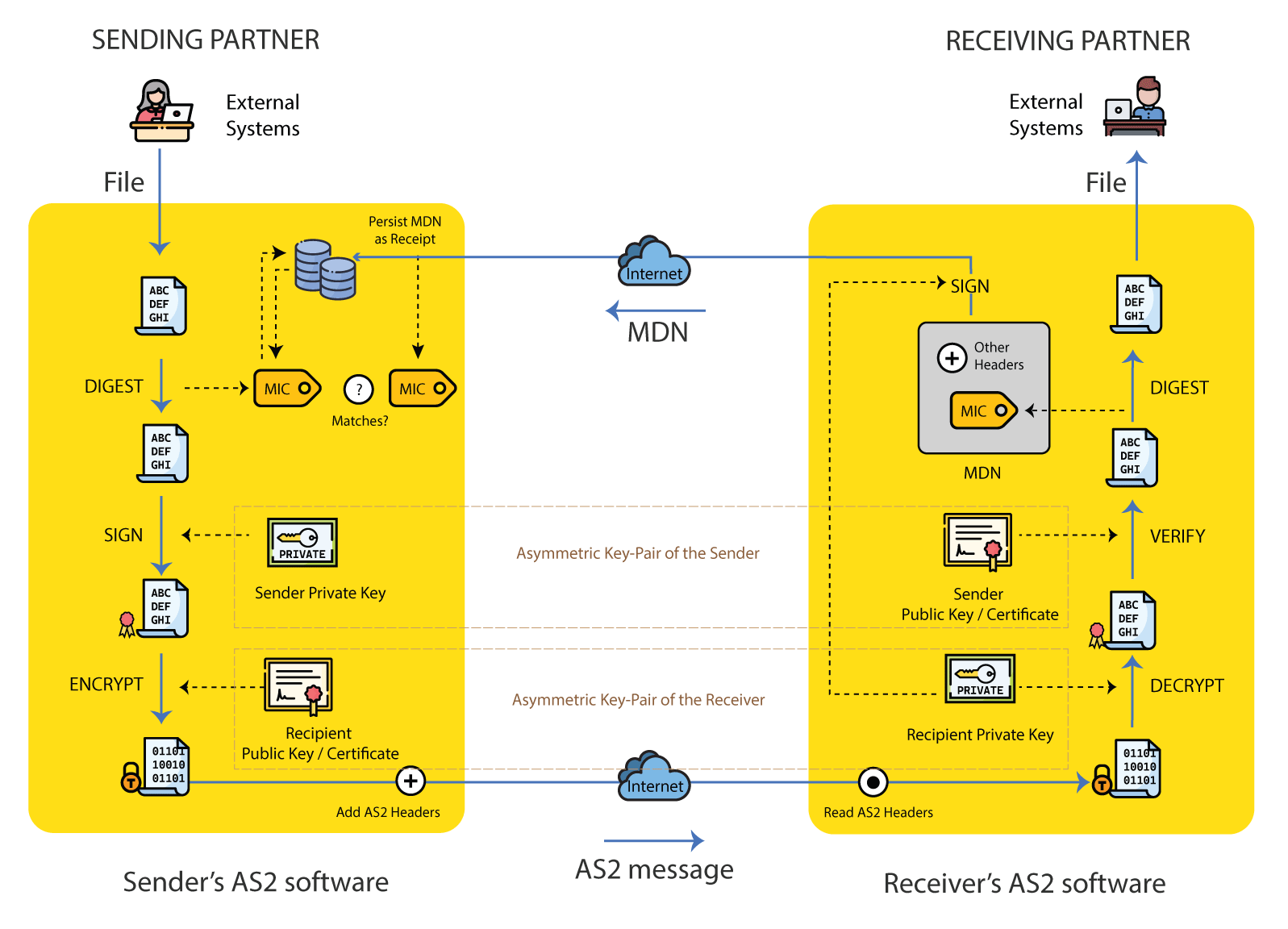
Every platform will have to store the data files being transmitted or received at some point. In most practical cases, this storage spans several months to satisfy business records or audit requirements. Therefore, just as security features protect content during transfer, your solution MFT should be able to securely store the content to prevent access from unauthorized parties.
Most cloud-based platforms, such as the Aayu MFT gateway, employ cloud-native storage services that provide at-rest encryption by default. For organizations with high regulatory hurdles, additional security can be facilitated by providing customer-managed encryption keys (CMK) or hardware-level encryption like BitLocker. This is especially important in on-premises or dedicated installations where physical hardware control is a priority.
Guaranteed delivery is a major part of the essence of “managed” in managed file transfer. It is arguably as important as the secure file transfer function itself because, without a guarantee of receipt, there is no way to ensure the completion of a critical data transaction. Once a file is handed over to the MFT server, it should provide a guarantee that the recipient got the file intact.
Most MFT protocol options, such as AS2 and other applicability-statement flavors,include digital receipts known as MDNs (Message Disposition Notifications). These are governed by technical standards like RFC 4130. To ensure reliability, this must be complemented with:
Auto-retry mechanisms that handle transient network failures automatically.
A robust failure notification system to alert users about transmission issues.
Checkpointing and restart capabilities for large file transfers.
Real-time status tracking for every message in the lifecycle.
If your solution MFT requires you to log in regularly just to check for new transactions or failures, it will quickly become a monitoring nightmare. Support for push notifications via emails or instant messengers like Slack or Teams is essential. These alerts ensure that administrators and responsible end-users are immediately aware of transmission failures or anomalies without additional manual effort.
Furthermore, modern managed file transfer software provides deep observability into the system’s health. While autonomy is important, you should always be able to drill down into the details of transactions if the need arises. Robust logging and auditing are critical considerations for any platform choice, as is the ease of analyzing this information to detect performance bottlenecks.
Integrating your managed file transfer software with the rest of your business infrastructure is highly beneficial for automation and performance. It is essential that your solution MFT goes beyond traditional transfer functions and offers mechanisms for integrating with in-house systems, ideally with no-code or low-code options.
While many products offer conventional integrations like folder-based file uploads, it is better to have capacity for modern technologies. These include:
REST APIs for custom software connections and programmatic control.
Webhook notifications for event-driven workflows that trigger actions upon file receipt.
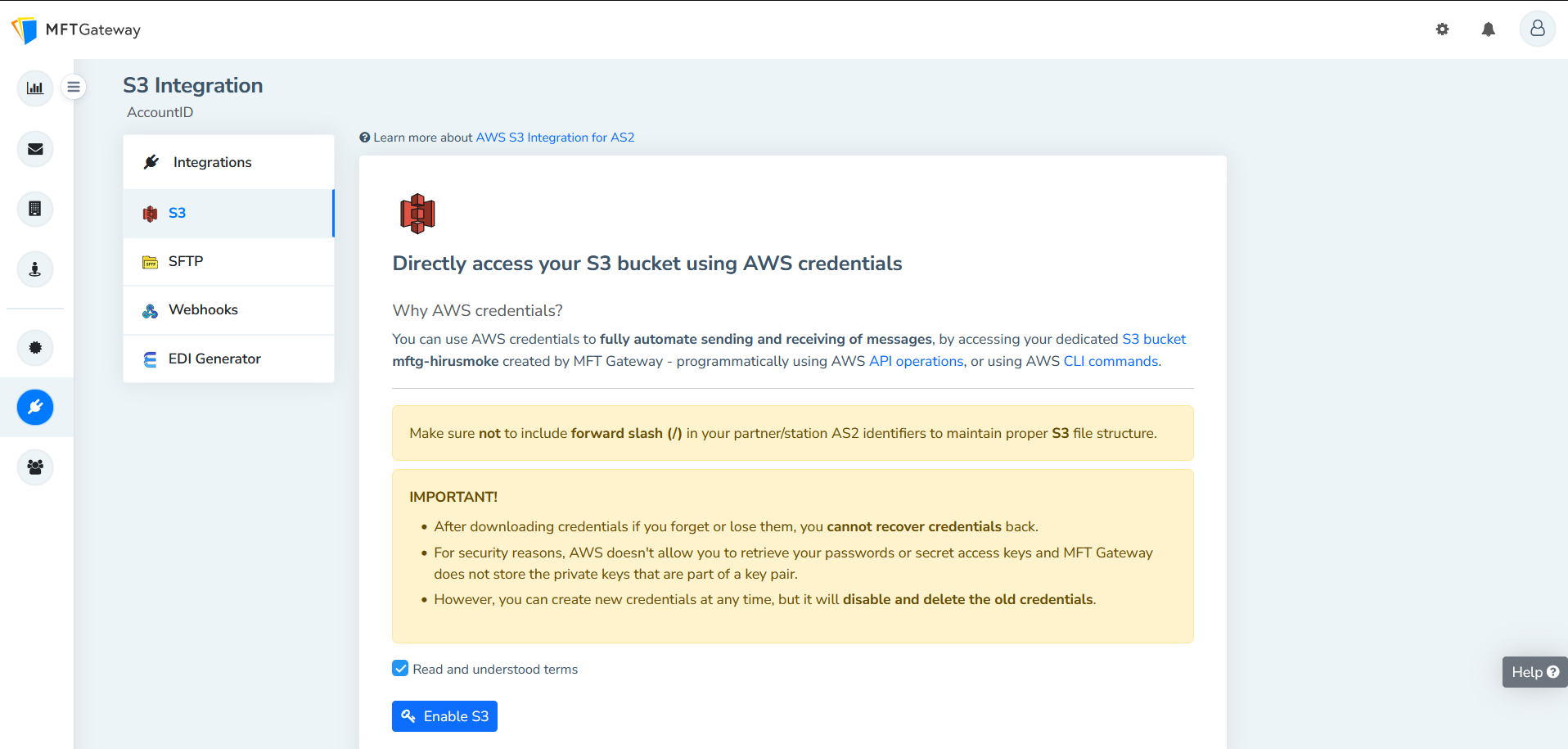
Cloud-native integrations, such as AWS S3 bucket-based automation, for cloud-migrating infrastructure.
Support for various MFT file transfer software connectors to link disparate systems.
Files involved in managed file transfer often contain confidential data, making proper access control essential. Role-based access control (RBAC) is a versatile mechanism where each user is assigned a role with only the relevant permissions. For example, support personnel might be allowed to change connection configurations but may be restricted from viewing the actual files being transacted.
Automated audit logging complements these controls by recording every user action or configuration change. This level of detail is necessary for future reference, troubleshooting, and meeting legal or federal compliance standards like the General Data Protection Regulation (GDPR). Without these logs, an organization might struggle to prove data integrity during a formal audit or security review.
The underlying MFT protocol standards evolve over time with new features and security upgrades. For instance, AS2, the most popular protocol in the retail industry has incorporated several extensions since its original publication. Features like filename preservation and support for multiple files in a single message can significantly reduce costs during batched transfers.
A solution MFT that stays abreast of these developments while maintaining core stability is essential for staying competitive. Using modern MFT software ensures you can reap the maximum benefit from the latest security patches and efficiency improvements without needing to rebuild your entire file transfer architecture.
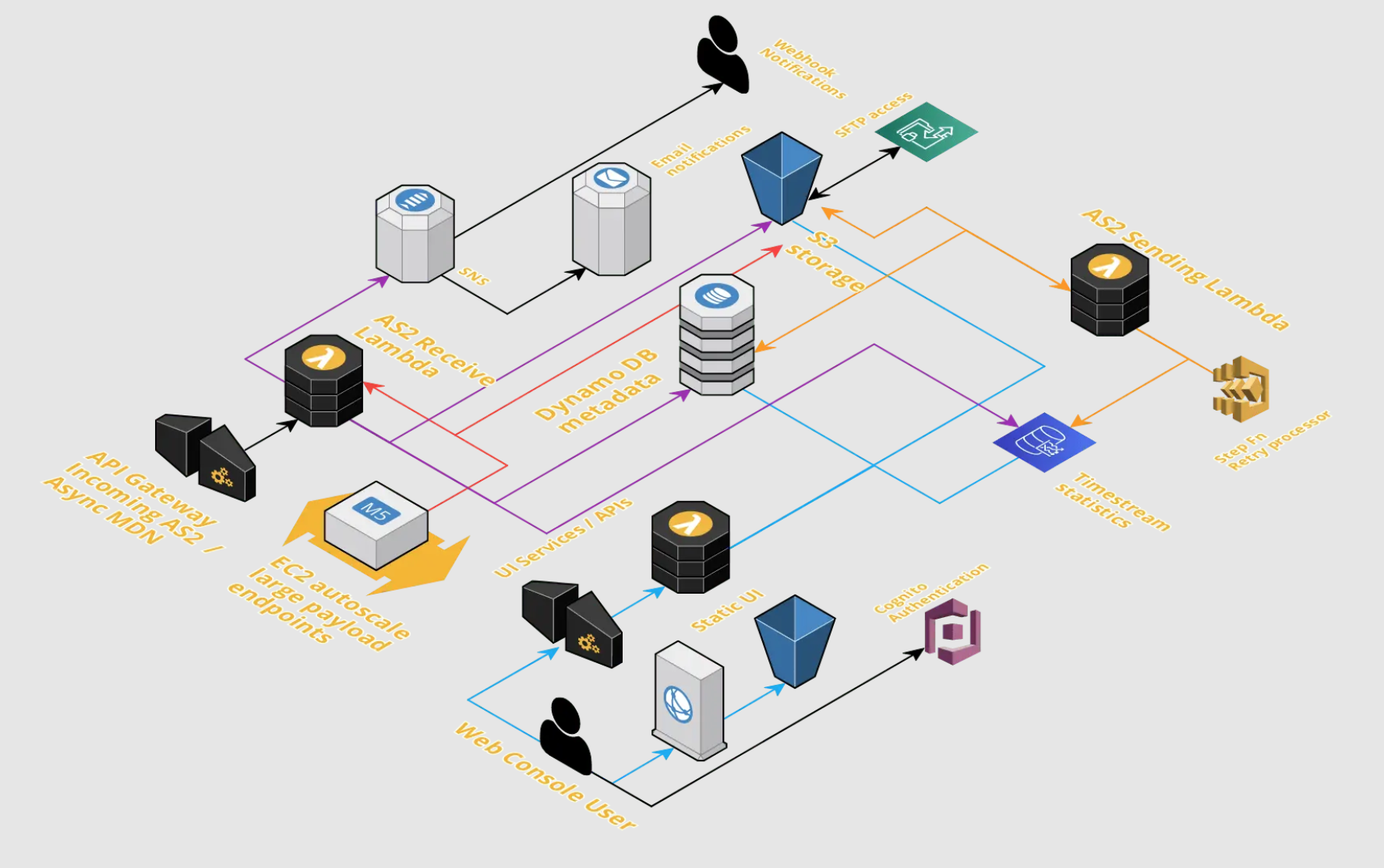
The solution MFT you choose today is likely to serve your business for several years, so you must plan for the scale of the future. The simplest way to achieve this is to select a cloud-native platform that transparently scales up and down with your business activities. This prevents the need for significant over-allocation of budget or resources to handle unexpected spikes in data volume.
If you are already handling high transactional volumes, look for MFT solutions that offer volume-independent pricing models. Keeping your pricing and scaling options open allows you to embrace changes in your business landscape at the same pace they occur. By choosing a flexible MFT file transfer software, you ensure that your infrastructure never becomes a bottleneck for company growth.
Modern MFT solutions go beyond typical security features to become an integral part of your organization’s business workflow and cybersecurity portfolio. When choosing your next platform, ensure it checks all the boxes for automation, observability, and scalability.
Ready to modernize your file transfers?
Check out our cloud-native MFT solution to see how its zero-maintenance, unlimited scalability, and rich feature-set fits into your business workflow. Alternatively, explore Aayu standalone AS2 solution that can run anywhere to meet your maximum control and customization needs.
Join hundreds of organizations already taking full control of their B2B AS2 communications with our trusted solutions. Contact us today to tailor a solution that fits your specific AS2 EDI needs.
No commitment, all value. Try the AS2 Solution Risk-Free and discover how our solutions can transform your business workflows. No credit card required.