














































































































































































































MFT Gateway is a hosted Software as a Service (SaaS) solution that enables file exchange over the AS2 or SFTP protocol, without the need to install or maintain.
Start Free Trial
Plan a smooth transition from AS2 to AS4 with our 10-step migration checklist. Learn how to manage hybrid networks, P-Modes, security, and message exchange for compliant, future-ready B2B integrations.

Adeesha Jayasinghe
Published: 26 Jan 2026
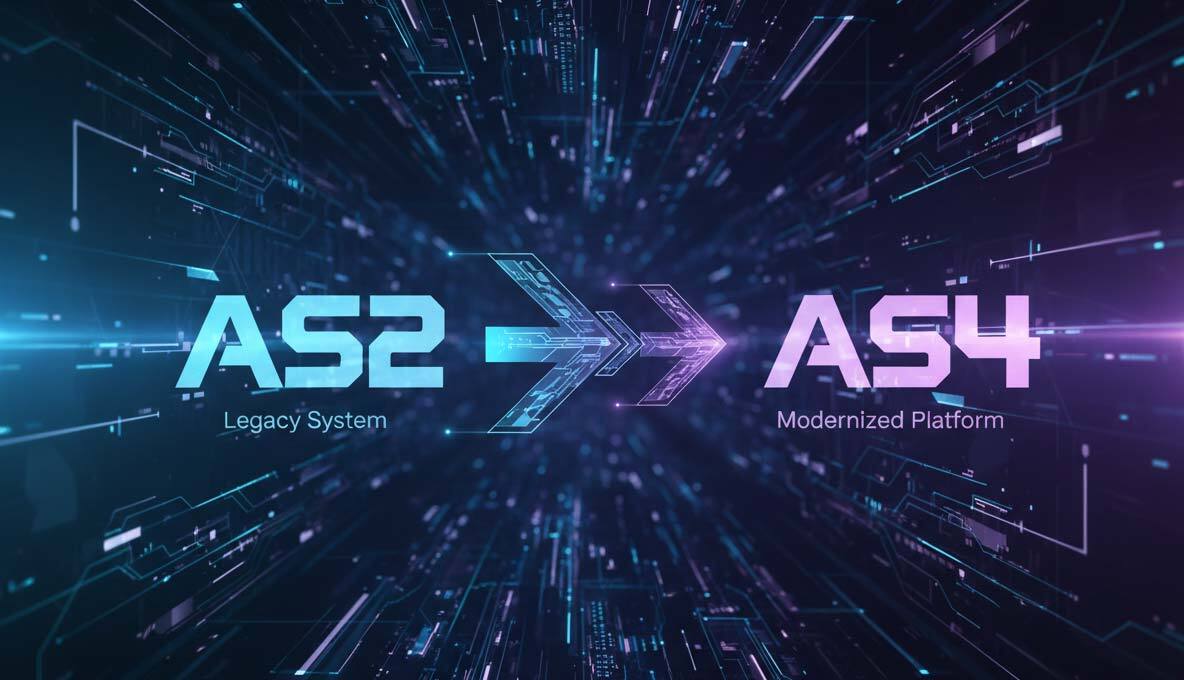
For over two decades, the AS2 (Applicability Statement 2) protocol has served as the backbone of B2B data exchange, particularly in retail and supply chain ecosystems. However, as regulatory frameworks evolve and modern interoperability networks such as Peppol and eDelivery continue to expand, organizations are increasingly adopting AS4 as the long-term successor to AS2.
Migrating from AS2 to AS4 is not just a protocol upgrade but a strategic shift toward service-oriented, federated, and compliance-driven interoperability. This blog presents a structured 10-step migration checklist to help organizations plan a secure, compliant, and future-ready transition to AS4.
Before making any infrastructure changes, analyze your trading partner landscape by industry verticals and geography. The protocol choice is often dictated by the ecosystem you are entering rather than by internal technical preference.
Retail and Logistics Major US retailers and traditional supply chains (such as Walmart or Amazon) continue to rely heavily on AS2. These integrations typically remain AS2-based and do not require immediate migration.
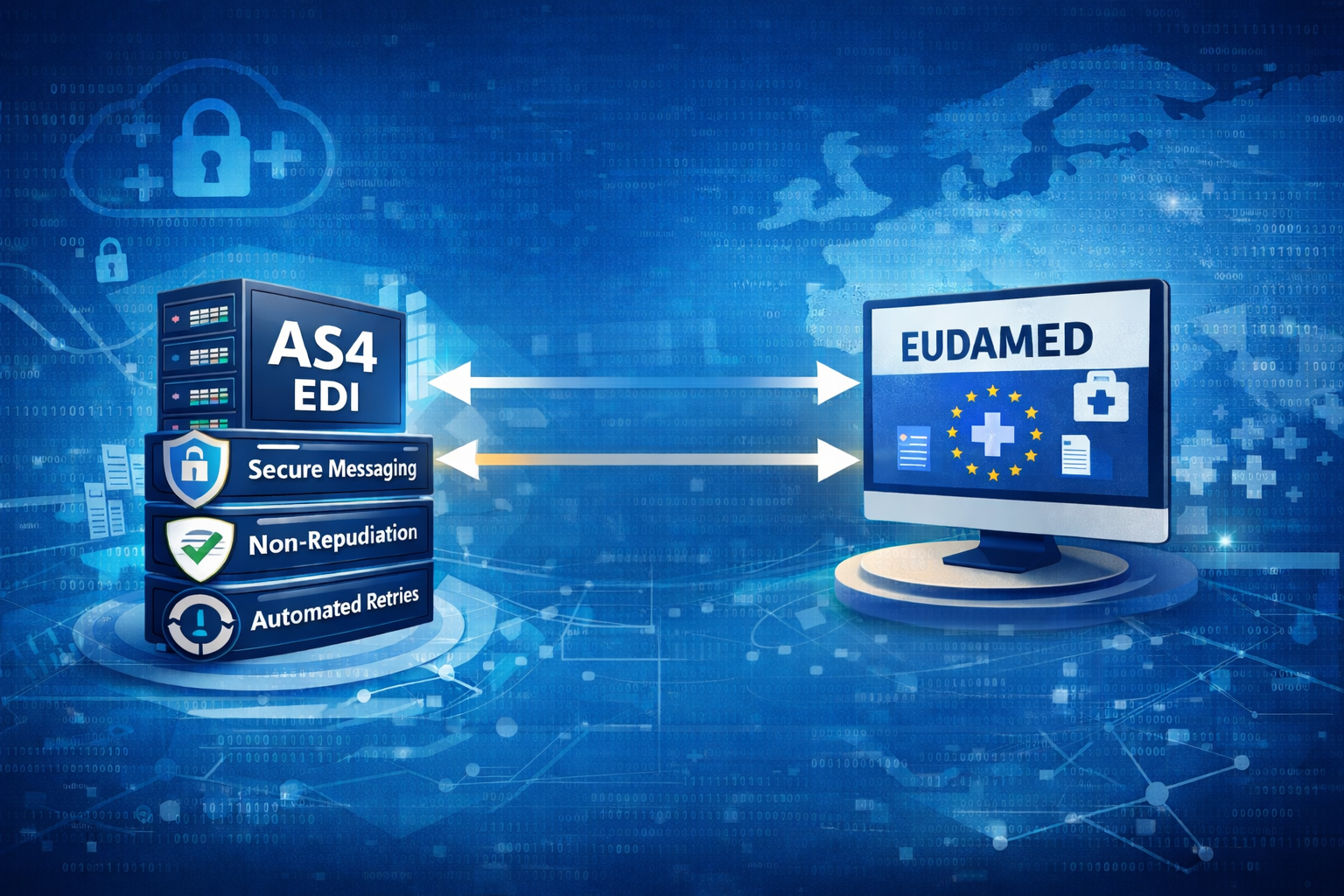
Healthcare, Government, and E-Invoicing Regulated European domains mandate AS4. Integrations with platforms such as EUDAMED or participation in the Peppol network require strictly compliant AS4 connectivity.
Most partners operate in both worlds, making a hybrid strategy essential when expanding into regulated markets.
AS4 is commonly deployed in federated network models, which differ significantly from AS2’s point-to-point design.
2-Corner Model Direct sender-to-receiver communication, similar to traditional AS2.
4-Corner Model Messages are exchanged through certified Access Points, which route traffic between participants. This model is mandatory for networks such as Peppol and eDelivery.
Organizations must decide whether to connect via an existing certified Access Point provider or to operate their own Access Point, which involves certification, PKI infrastructure, audits, and ongoing compliance maintenance.
A hybrid-capable solution is therefore critical. Our Aayu MFT Gateway is designed to support both AS2 and AS4 within a single, unified platform. The following AS4 capabilities are planned for an upcoming release:
Continued support for legacy AS2 partners
Rapid onboarding of AS4 partners and networks
Centralized security, monitoring, and certificate management
This approach significantly reduces operational complexity while supporting long-term migration goals.
AS2 integrations often rely on bilateral or arbitrary identifiers agreed upon between trading partners. AS4, especially in regulated networks, requires strictly standardized, non-arbitrary identifiers.
Organizations typically coordinate directly with the relevant network authorities or trading partners to obtain their officially registered identifiers, which are issued according to standardized schemes such as ISO 6523 or URN-based identifiers. These identifiers are published through network registries and are essential for correct message routing and interoperability.
AS4 configuration is centered around Processing Modes (P-Modes), which define both technical and business semantics of message exchange.
P-Modes specify elements such as:
Sender and receiver roles
Business services and processes
Actions representing operations
Applicable agreements and policies
Systems must be capable of dynamically applying these metadata values based on the document type and business context, rather than relying on static, connection-level configuration as in AS2.
AS4 introduces flexible Message Exchange Patterns (MEPs) that address common connectivity challenges.
Push The standard model of AS2, where the sender opens a connection to the receiver. The receiver may be unreachable if it is behind a restrictive firewall or does not have a static public IP address.
Pull A feature unique to AS4 where the receiver polls the server for pending messages.
The ability to support pull-based messaging is often a decisive factor when integrating with government or healthcare systems.
Security in AS4 is more structured and rigorous than in AS2.
AS4 relies on WSS (Web Services Security) standards for message signing and encryption, mandates modern cryptographic algorithms, and requires TLS 1.2 or higher. Organizations must plan for proper certificate lifecycle management, including trust anchors, renewals, and rollover procedures, to maintain uninterrupted compliance
AS4 changes how business payloads are encapsulated and transported.
Messages are wrapped in SOAP envelopes with MIME attachments, which differ structurally from AS2’s MIME-only approach. Additionally, AS4 supports native GZIP compression, which should be enabled to optimize bandwidth usage, especially for large XML documents or high-volume EDI traffic.
AS2’s Message Disposition Notifications (MDNs) are replaced in AS4 by Signal Messages.
Signal messages are structured SOAP-based XML responses that confirm delivery status and communicate standardized error information. Monitoring systems must be updated to interpret these signals correctly to support reliable retry and recovery behavior.
Before production rollout, conduct comprehensive testing covering:
Functional message flows
Interoperability with partners
Failure and recovery scenarios
Where possible, run AS2 and AS4 in parallel to validate data consistency. Once AS4 integrations are stable, legacy AS2 connections can be systematically decommissioned, certificates revoked, and operational teams trained on AS4-specific monitoring and support processes.
Migrating from AS2 to AS4 is a strategic evolution toward compliance-ready, network-based interoperability. Organizations that adopt a hybrid approach and follow a structured migration plan can modernize their B2B integrations without disrupting existing partner relationships.
With AS4 forming the foundation of eDelivery, Peppol, and other regulated ecosystems, early and well-planned migration is essential for long-term success.
We plan to release AS4 support for the Aayu MFT Gateway soon. If your organization is preparing for an AS2 to AS4 migration or would like to be notified when our AS4 capabilities become available, contact us to stay informed about the release and early adoption opportunities.
Join hundreds of organizations already taking full control of their B2B AS2 communications with our trusted solutions. Contact us today to tailor a solution that fits your specific AS2 EDI needs.
No commitment, all value. Try the AS2 Solution Risk-Free and discover how our solutions can transform your business workflows. No credit card required.