















































































































































































































MFT Gateway is a hosted Software as a Service (SaaS) solution that enables file exchange over the AS2 or SFTP protocol, without the need to install or maintain.
Start Free Trial
Learn how AS2 EDI message retries ensure reliable AS2 connectivity, prevent data loss, and strengthen secure file transfers using modern AS2 software.

Kumudika Rupasinghe
Published: 22 Dec 2025
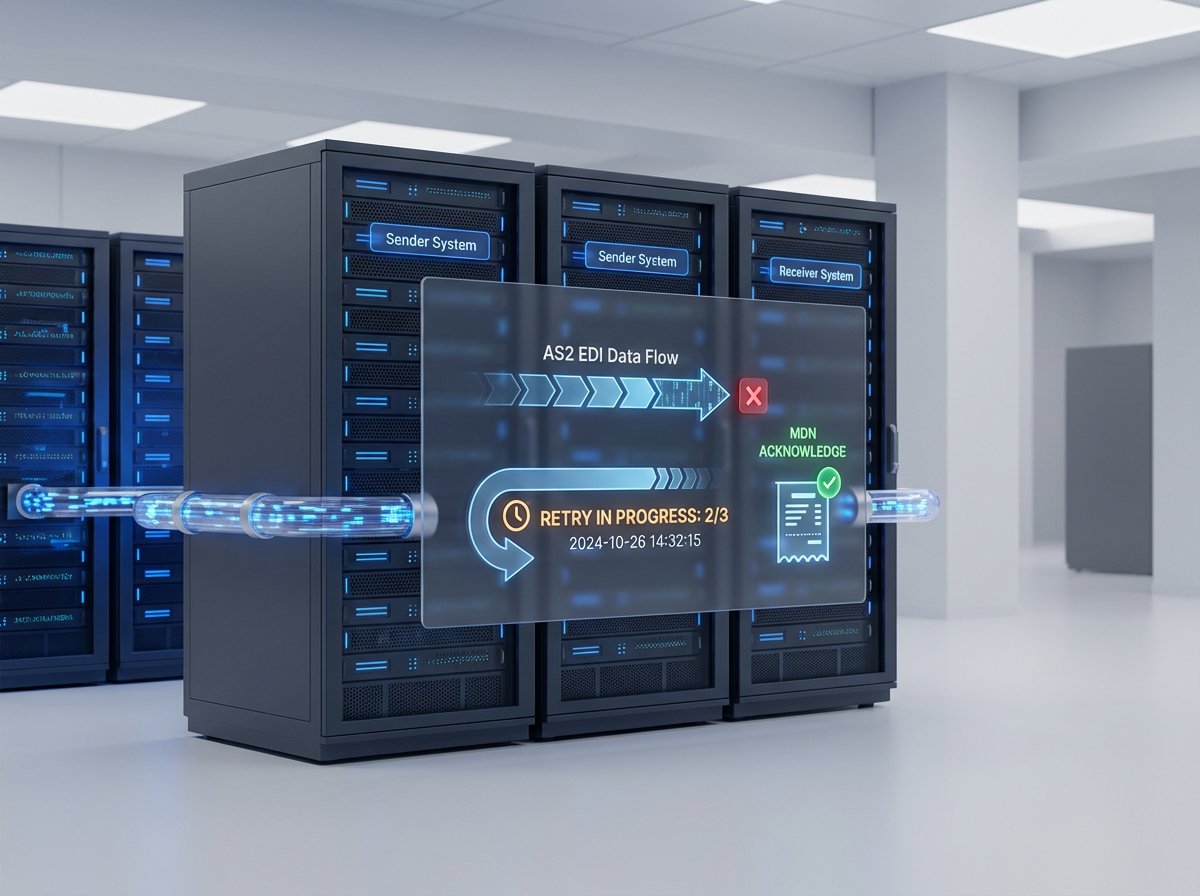
In today’s interconnected digital ecosystem, AS2 EDI has become a cornerstone of secure B2B data exchange. Enterprises rely on it to move sensitive business documents such as purchase orders, invoices, and shipping notices between trading partners. When these transfers fail, even briefly, the impact can ripple across supply chains, finance teams, and compliance workflows.
It’s clear why AS2 EDI reliability matters. Temporary network issues, partner server downtime, or intermittent connectivity problems can interrupt message delivery. Without safeguards in place, these disruptions can lead to missing acknowledgments, delayed processing, or even compliance violations. This is where automatic AS2 message retries play a critical role, ensuring that transient failures don’t turn into permanent business problems.
This article explains why automatic retries are essential, how the AS2 communication protocol handles them, and how modern AS2 software like MFT Gateway ensures dependable, auditable message delivery.
At its core, AS2 connectivity enables secure, point-to-point data exchange over HTTP or HTTPS. It replaces slower, less secure transfer methods with encrypted communication and message-level acknowledgments.
However, no network is perfect.
Even the most robust AS2 server environments experience occasional disruptions. These failures are often temporary, but their consequences can be serious if messages are not retried correctly.
Common causes of AS2 transmission failures include
Network congestion or packet loss
Temporary partner server unavailability
Gateway or firewall timeouts
Short-lived infrastructure outages
When AS2 messages fail without retry logic, businesses face delays, manual reprocessing, and increased operational risk. Automated retries ensure that communication resumes seamlessly once the issue clears.
Automatic retries are not just a technical convenience. They are a business safeguard.
Business continuity
A failed AS2 transmission can delay shipments, halt invoicing, or disrupt partner workflows. Retries keep data moving without manual intervention.
Operational efficiency
Manually identifying failed transmissions wastes valuable IT time. Automated retries free teams to focus on strategic initiatives instead of firefighting.
Resilience under pressure
Retries provide a safety net during peak traffic, system upgrades, or unexpected outages, without overwhelming partner systems.
Trust and accountability
Consistent delivery builds confidence with trading partners and supports SLA commitments.
In short, automatic retries transform fragile integrations into resilient pipelines.
The AS2 protocol is designed for secure and reliable data exchange, but retry behavior must be implemented carefully.
According to AS2 specifications, systems must evaluate HTTP response codes before attempting a retry. Not all failures are created equal.
Transient errors that should trigger retries. These errors indicate temporary conditions that are likely to resolve on their own:
In these cases, retrying the AS2 message increases the likelihood of successful delivery without intervention.
Some errors indicate issues that retries alone cannot fix:
Retrying these messages without correction only wastes resources. The message must be fixed before resending.
This distinction is essential for maintaining healthy AS2 connectivity and avoiding unnecessary retries.
The AS2 specification leaves retry details intentionally flexible. This allows organizations to align retry behavior with business needs and partner expectations.
Key retry parameters are typically defined in trading partner agreements:
Maximum retry attempts
Total retry duration
Interval between retries
Timeout thresholds
Handling of duplicate Message-IDs
An AS2 server must be capable of receiving repeated Message-IDs and resending the same MDN when appropriate. This ensures consistency and auditability across retries.
Aayu Technologies’ MFT Gateway is built to handle real-world AS2 failures intelligently and transparently.
By default, MFT Gateway retries only failed messages. However, users can enable Auto Retry Send Incomplete Messages at the partner level for added resilience.
What counts as an incomplete message?
A message is marked incomplete when:
The trading partner accepts the message
But fails to return an acknowledgment (MDN)
Within the configured transmission timeout
This scenario is common in overloaded or unstable partner environments. Without retries, messages may remain in limbo.

MFT Gateway supports two configurable retry strategies, allowing teams to tailor behavior to specific partner conditions.
Exponential Backoff (Default Mode)
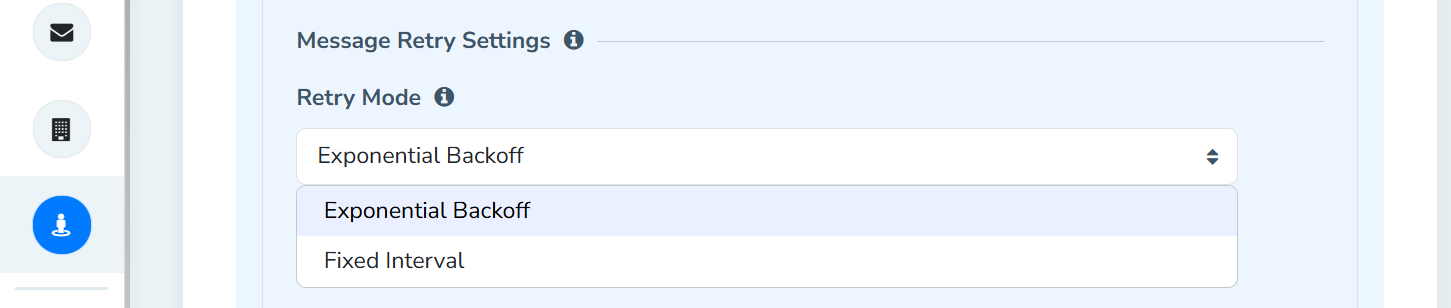
With exponential backoff, each retry is spaced farther apart than the last.
How it works:
Initial retry after 30 seconds
Next retry after 60 seconds
Then 120 seconds, and so on
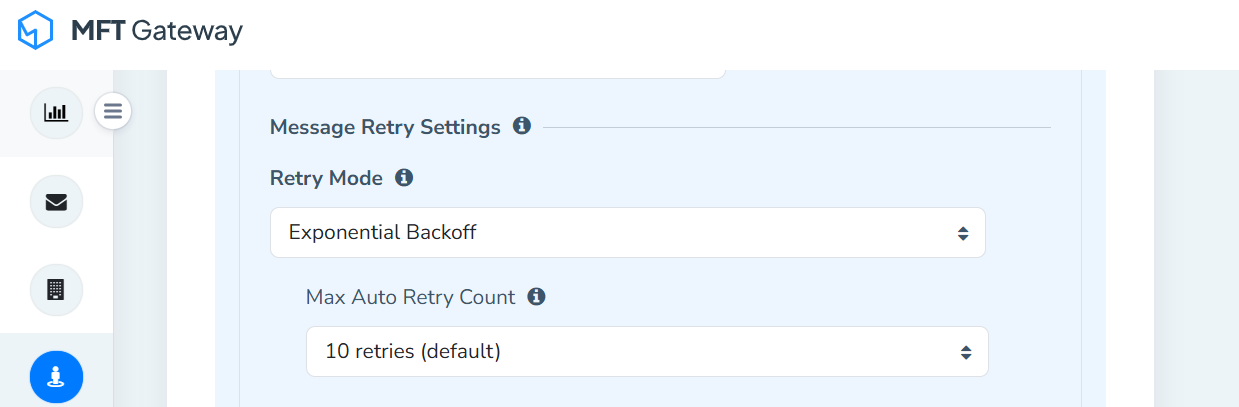
Best used when:
Partner AS2 servers are intermittently unavailable
Network congestion is suspected
You want to avoid overwhelming the partner system
Example:
If a partner’s AS2 server struggles during peak hours, exponential backoff spreads retries over time, increasing success without adding load.
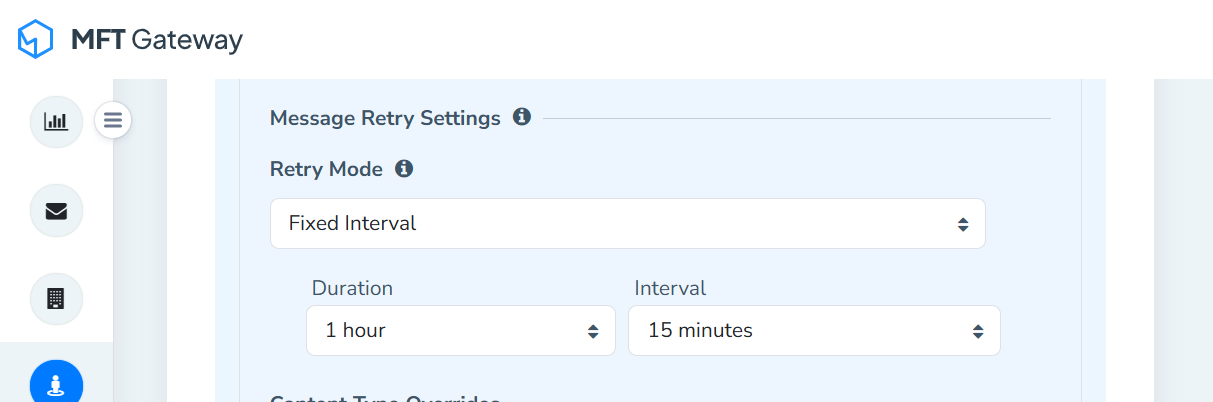
Fixed interval retries occur at consistent time gaps for a defined duration.
Example configuration:
Retry every 15 minutes
For a total duration of 2 hours
Best used when:
Partner downtime is predictable
Maintenance windows are scheduled
Steady retry behavior is preferred
Example:
If a partner performs nightly maintenance, fixed retries ensure messages are delivered as soon as the system comes back online.
Every retry attempt in MFT Gateway is logged.
This provides:
Full delivery transparency
Clear audit trails
Faster troubleshooting
Improved compliance reporting
For organizations operating under regulatory frameworks, these logs are critical for proving message integrity and delivery assurance.
Modern AS2 software does more than move files. It supports operational resilience at scale.
Together, these benefits strengthen the foundation of any AS2-based integration strategy.
Automatic AS2 message retries are not just a technical feature. They are a strategic advantage.
By ensuring consistent delivery, retries protect revenue streams, maintain partner trust, and prevent minor disruptions from escalating into major incidents. In a world where digital communication underpins every transaction, resilience is no longer optional.
With intelligent retry handling, enterprises can focus on growth and innovation, confident that their AS2 EDI infrastructure is built to withstand real-world conditions.
Reliable AS2 communication depends on more than encryption and acknowledgments. It requires intelligent recovery from failure.
By combining protocol-aware retry logic, configurable strategies, and full visibility, Aayu Technologies’ MFT Gateway ensures dependable AS2 connectivity even under adverse conditions. Automatic retries minimize downtime, reduce manual intervention, and transform potential failures into seamless recoveries.
In doing so, organizations gain not just reliability, but confidence in every exchange.
Ready to strengthen your AS2 integrations with intelligent retries and enterprise-grade reliability? Fill the contact form below to see how MFT Gateway can modernize your AS2 infrastructure and protect your critical data exchanges.
Join hundreds of organizations already taking full control of their B2B AS2 communications with our trusted solutions. Contact us today to tailor a solution that fits your specific AS2 EDI needs.
No commitment, all value. Try the AS2 Solution Risk-Free and discover how our solutions can transform your business workflows. No credit card required.