

































































































































































































MFT Gateway is a hosted Software as a Service (SaaS) solution that enables file exchange over the AS2 or SFTP protocol, without the need to install or maintain.
Start Free Trial
Learn what AS4 protocol is, how it works, and why it’s used for secure B2B and EDI integrations. A complete AS4 guide for modern enterprises in 2026.

Hirudinee Liyanage
Published: 13 Jan 2026

AS4, or Applicability Statement 4, is a protocol used for B2B communication. This standard was defined as an open standard in 2013 by OASIS (Organization for the Advancement of Structured Information Standards). OASIS Open is a non-profit organization backed by leading tech companies like IBM, Google, and Microsoft. They specialize in developing specifications to standardize processes and communication protocols, including modern standards like the AS4 protocol.
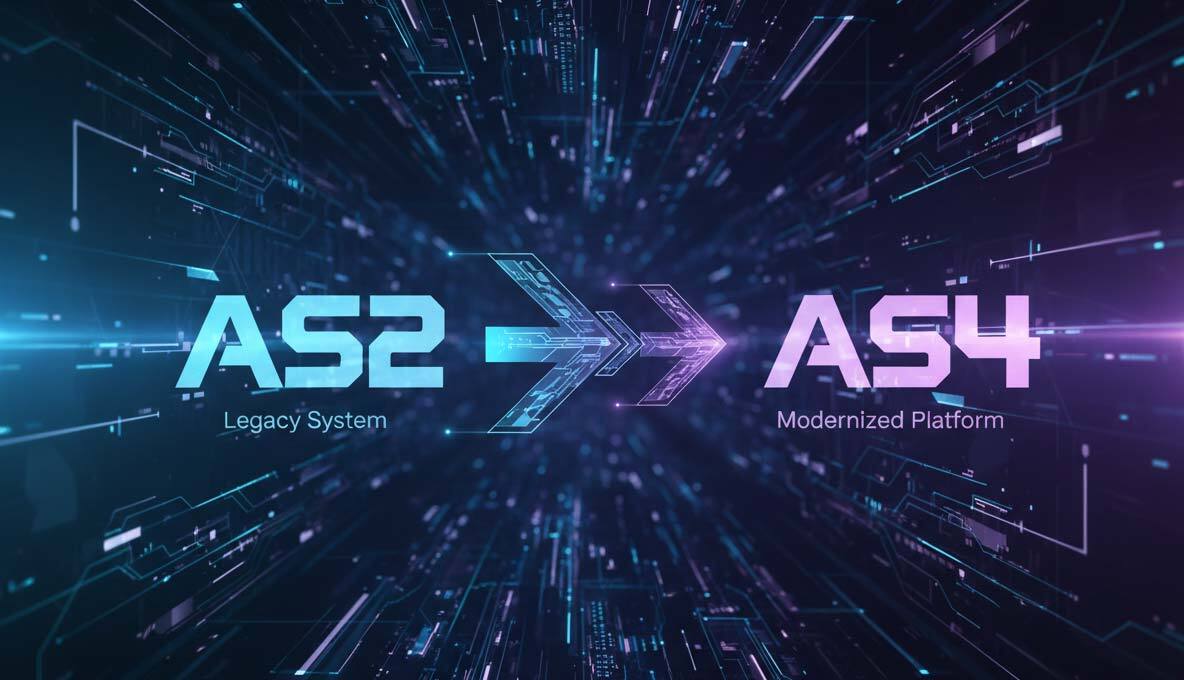
AS4 is layered over HTTP and built on web services standards such as SOAP. This modern take on secure messaging makes AS4 a strong successor to earlier Applicability Statement protocols such as AS3 and AS2. With its improved reliability and security model, the AS4 communication protocol has quickly become one of the most widely adopted standards for B2B data exchange.
AS4 is built on already existing standards that have been proven for interoperability. Because of this, AS4 connectivity between different systems, platforms, and vendors is much easier compared to older protocols.
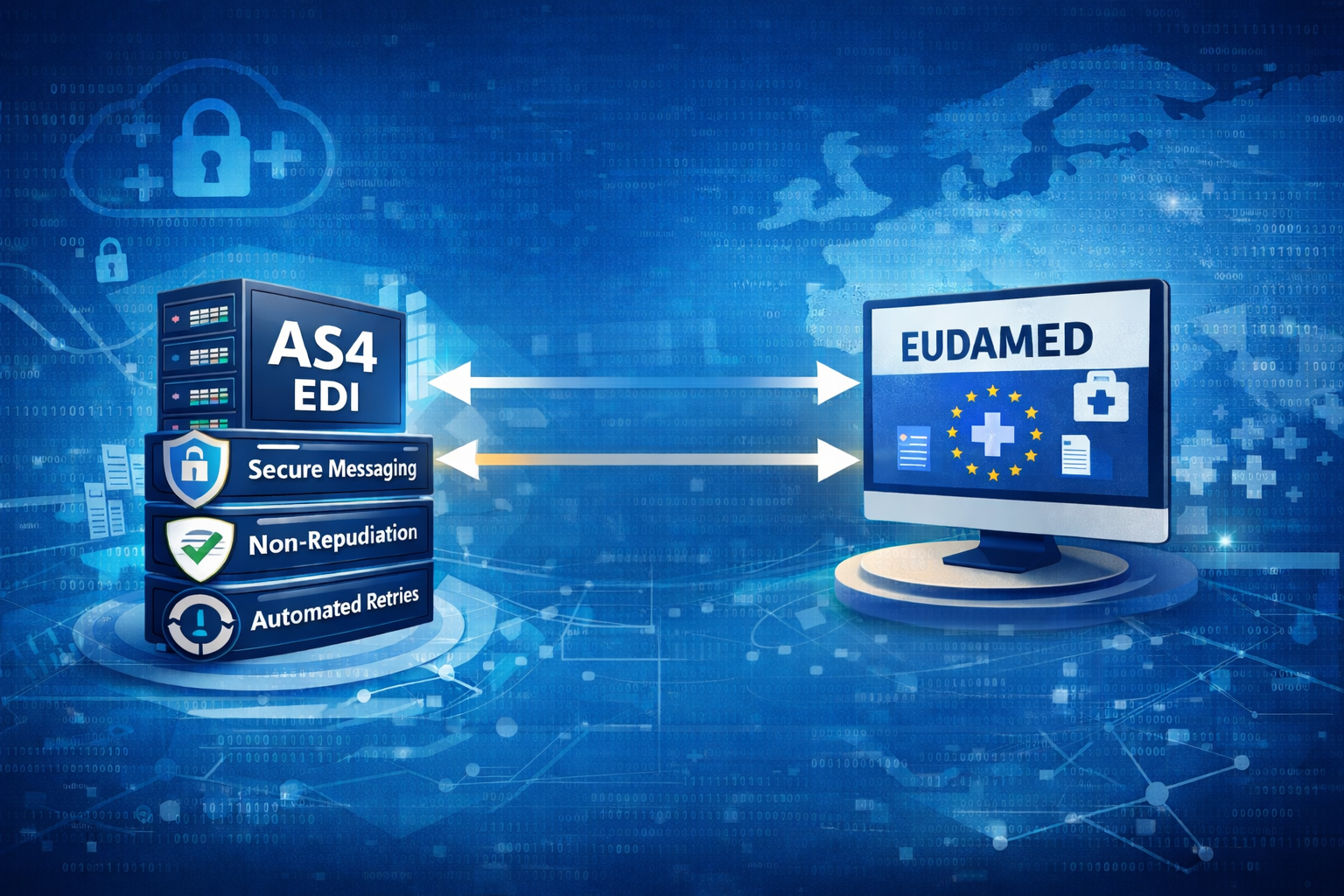
By incorporating WS-Security features, AS4 ensures message integrity and provides non-repudiation. This helps protect sensitive data during AS4 EDI exchanges.
Just like AS2, AS4 can be used to securely transfer any type of data file. Although most users rely on AS4 for EDI files, the AS4 software ecosystem supports a wide range of payload formats.
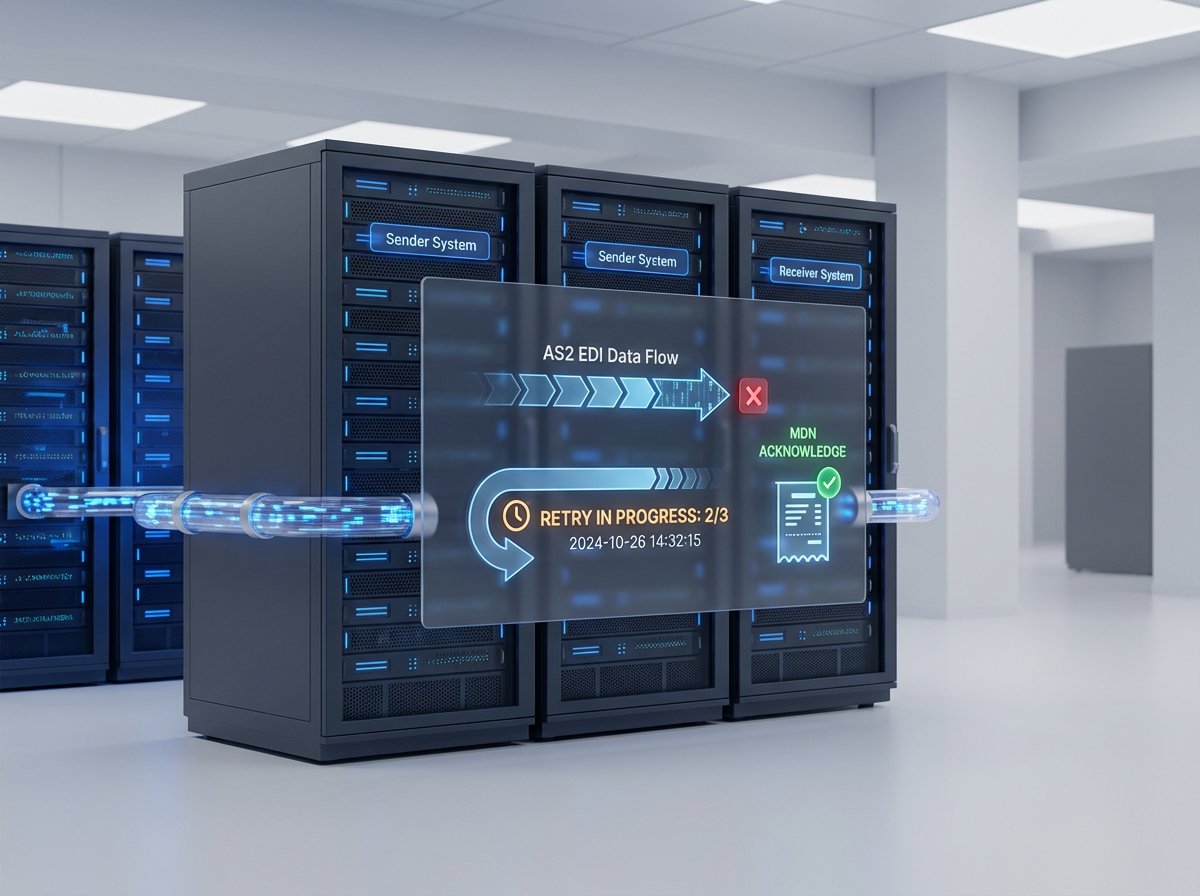
AS4 includes mechanisms for message delivery confirmation through acknowledgments from the receiver. This ensures the sender knows whether the message was successfully delivered or not.
AS4 supports file compression, making it possible to transfer large files over the network efficiently, a valuable capability for teams working with heavy EDI or XML data.
AS4 has several components that make communication between two parties possible. The Message Service Handler (MSH) establishes the communication between partners, and the MSH should also be able to communicate with the business application. The business application is typically an ERP or CRM system, which initiates an outgoing AS4 message and ultimately processes the incoming AS4 message.
P-Mode (Processing Mode) defines the parameters for how messages should be formatted, secured, and transmitted between partners. Both the sending and receiving MSHs must have P-Modes configured, and these processing modes have to be honored by all exchanged messages.
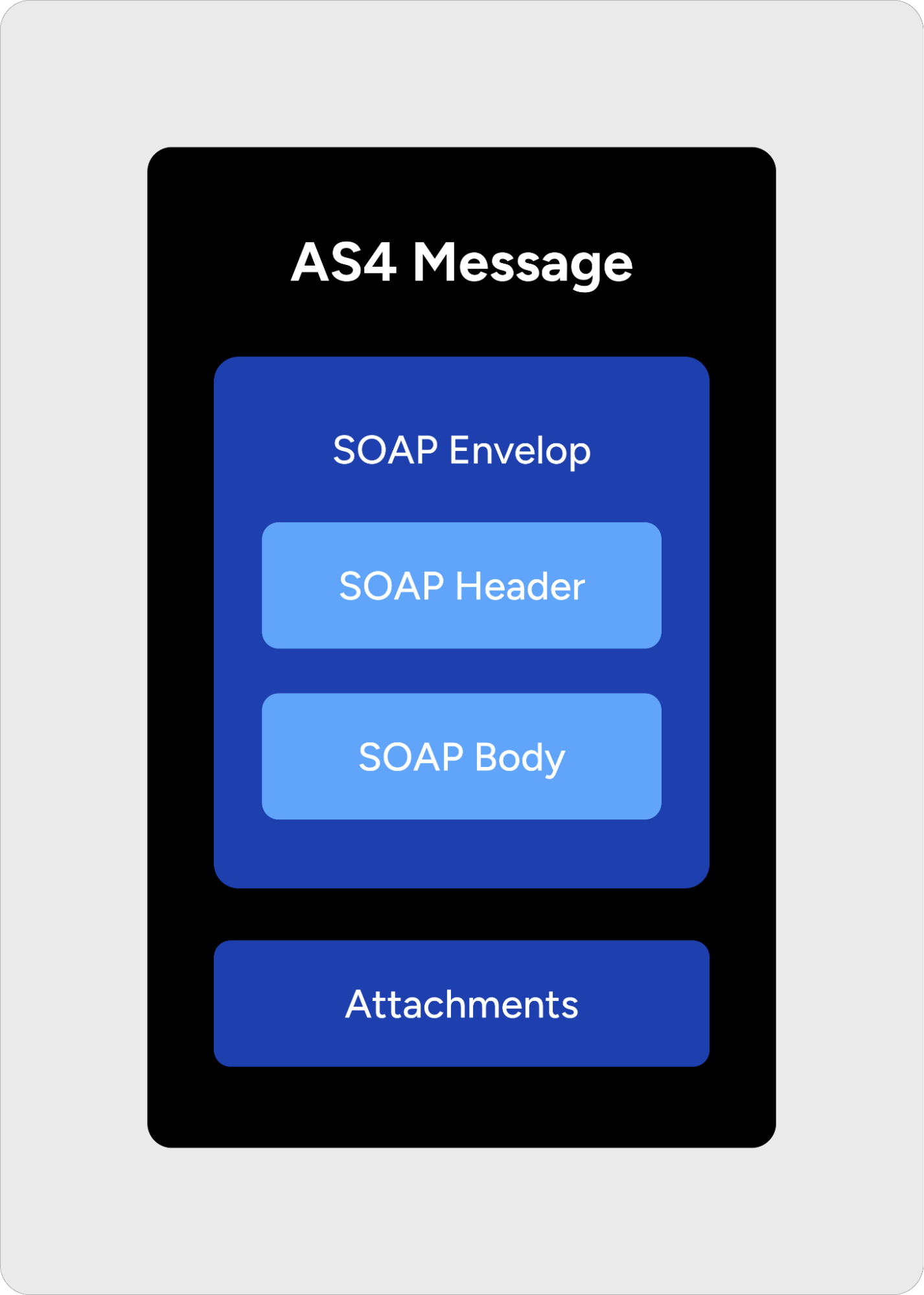
AS4 uses a SOAP message format for communication. An AS4 message can be divided into three main parts: SOAP Header, SOAP Body, and Attachments. The SOAP Header contains metadata and control information such as message identifiers, sender and receiver details, security information, and reliability settings. The SOAP Body carries the AS4-specific payload structure and references to the business data, while the Attachments contain the actual business payload, such as EDI, XML, or other file types. This separation allows AS4 to keep control information and business data clearly organized while supporting large and complex payloads.
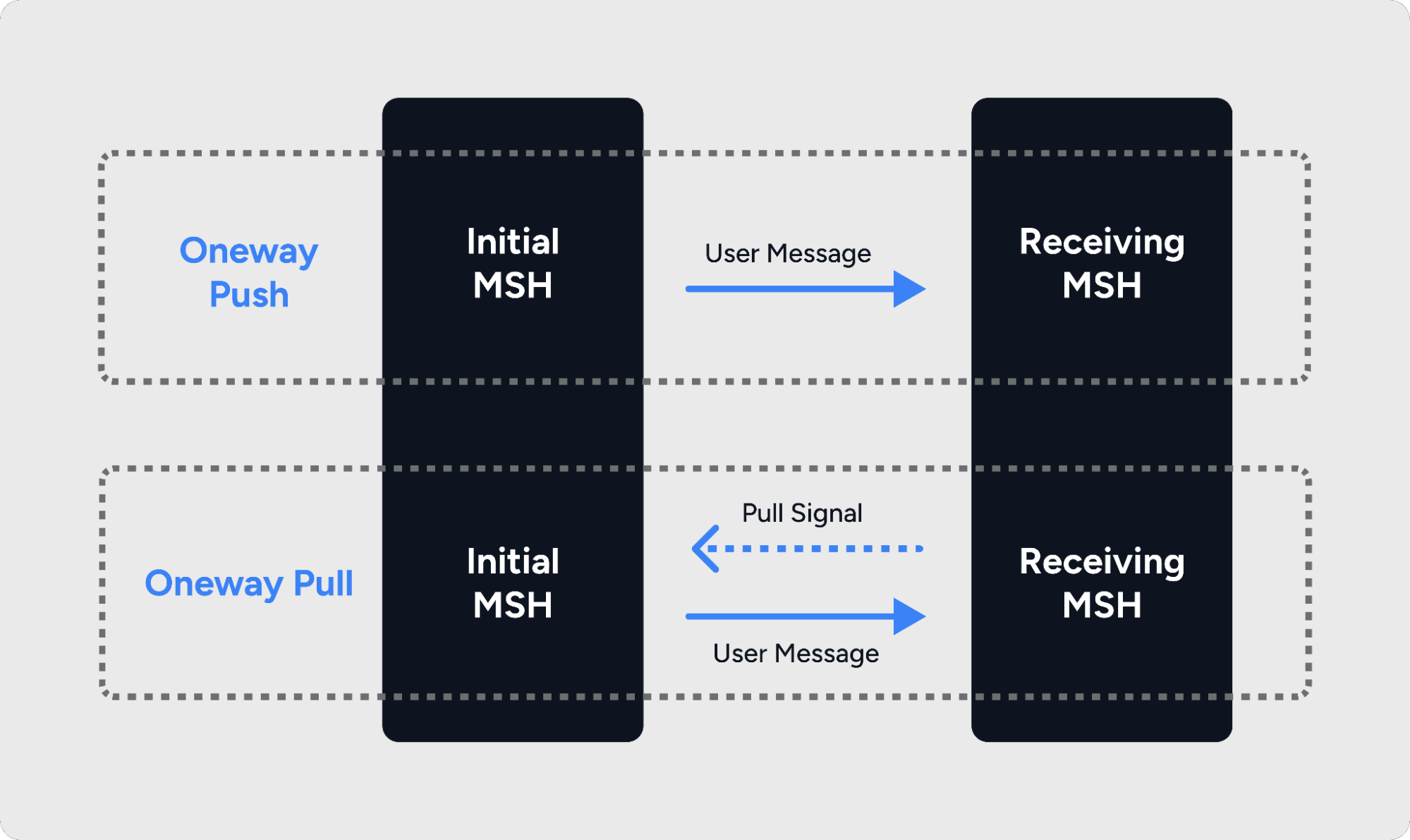
In AS4, there are four different message types. The two main categories are User Messages and Signal Messages. Signal Messages are further divided into three types: Receipt, Error, and Pull Request. Receipt and Error messages act as positive and negative responses to a User Message, indicating the status of the received message back to the sender. A Pull Request is initiated by the receiving MSH as a request to retrieve a new message from the sending MSH.
The official AS4 specification states that AS4 must support two message exchange patterns: one-way/push and one-way/pull.
The AS4 protocol offers strong end-to-end security, making it ideal for industries that rely on safe data exchange. With guaranteed delivery through acknowledgments, an AS4 server ensures dependable communication for mission-critical workflows.
Businesses working with AS4 EDI files benefit from its structured and interoperable design. Because the AS4 communication protocol follows standardized web-service rules, AS4 connectivity between different platforms and vendors is much easier to maintain. This interoperability is one reason governments and large enterprises are adopting AS4 rapidly.
Another advantage is flexibility. AS4 is payload-agnostic, meaning organizations can transfer different file types without changing their internal processes. Modern AS4 software simplifies onboarding, certificate handling and message tracking, allowing companies to scale integrations quickly and securely. For organizations aiming for digital transformation, AS4 remains a future-ready communication standard.
AS4 has been mandatory since 2020 for organizations in the European government sector (Peppol network). Because of this, thousands of businesses in both government and private sectors have moved to AS4 for B2B communications. These organizations include industries like utilities, healthcare, retail and logistics.
AS4 also replaced older methods like AS2 or SFTP for modern, web-service-based integration workflows. Today, it is widely used for mandates such as EU e-Invoicing (ICS2) and Australian pensions. If you are working with any of these systems, trading partners or compliance frameworks, you will likely need an AS4 server or a software solution that supports AS4 communications.
Implementing the AS4 protocol can be challenging for organizations transitioning from simpler file-based systems. Teams that are not from a technical background often struggle with the initial learning curve of the AS4 communication protocol.
Another common issue is certificate management. AS4 EDI transfers rely heavily on encryption and signatures, so even a small certificate mismatch or expiration can lead to message failures. Without proper tools, troubleshooting these problems becomes time-consuming and confusing for teams.
Many companies also face challenges when coordinating between multiple partners, each with different AS4 server setups or security expectations. Large file transfers, compression behaviours and delayed acknowledgments can add further complexity. Using reliable AS4 software with strong logging and monitoring features can significantly reduce these operational issues.
Aayu Technologies offers AS4 server solutions, both on-premise and SaaS. When selecting an AS4 software product, you should consider your requirements, price point, and ease of use. Below are some key features you may need in an AS4 communication system to work in your domain without trouble:
UI and API / SFTP integrations
How AS4 message flow errors are handled
How secure is the overall application
Value for the price
Customer support and disaster recovery plans
Whether you’re exploring AS4 for compliance, EDI workflows or partner onboarding, choosing the right AS4 protocol software will help ensure smooth operations and secure B2B communication.
Feel free to reach out to us via support@edigenerator.com!
Join hundreds of organizations already taking full control of their B2B AS2 communications with our trusted solutions. Contact us today to tailor a solution that fits your specific AS2 EDI needs.
No commitment, all value. Try the AS2 Solution Risk-Free and discover how our solutions can transform your business workflows. No credit card required.