





![Open-Source Transfer vs Managed File Transfer [Updated 2026]](/assets/images/blog/open-source-transfer-vs-managed-file-transfer.png)






Hosted SaaS solution for AS2 and SFTP file transfer. No infrastructure, instant setup.
Start Free Trial
EDI automates load tenders, status updates, and freight invoices for logistics teams. See the 6 benefits that matter in 2026 and what has changed.

Dithmeena Egodagamage
Published: 24 Jul 2026
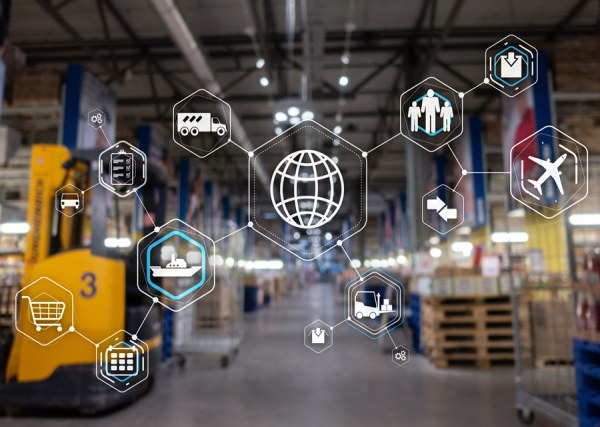
The main benefits of EDI in logistics are faster document exchange (load tenders, status updates, and invoices move in seconds instead of hours), fewer data-entry errors and accessorial disputes, lower processing costs, real-time shipment visibility, stronger customer retention, and the ability to scale transaction volume without scaling headcount.
Electronic Data Interchange (EDI) has transformed from a compliance checkbox into the backbone of modern supply chains, automating the exchange of load tenders, shipment status updates, freight invoices, and more between shippers, carriers, and 3PLs.
But the conversation has moved on in recent years. Today, EDI doesn’t just eliminate paper, it powers real-time shipment visibility, integrates with AI-driven capacity planning, and keeps logistics operations compliant with increasingly strict shipper and carrier mandates. If you’re still running on manual workflows or outdated EDI setups, this guide shows exactly what you’re leaving behind.
A few years ago, “faster document exchange” meant cutting out fax machines. Today, it means sub-second automated transmission of critical logistics documents across global supply chains.
EDI automates the exchange of
When a shipper sends a load tender, EDI triggers an automated cascade: the carrier confirms or declines via a 990, shipment status updates flow in via 214s as the freight moves, and a 210 invoice is generated on delivery. No humans in the loop. No delays.
For logistics companies handling thousands of loads per day, this speed directly translates to faster tender acceptance, better capacity utilization, and fewer missed pickup or delivery windows. In 2026, trading partners expect near-instant document confirmation. EDI delivers it.
For a real-world example of this exact 204/990/214 cycle, see our guide to Walmart load tender (204) EDI testing.
Manual data entry is where logistics profitability goes to die. A mistyped pickup appointment, a wrong weight or piece count on a load tender, or a missing field on a shipment status update can trigger billing disputes, detention claims, and reconciliation headaches between shippers and carriers.
EDI doesn’t eliminate every problem, but it does remove the re-keying step that causes most of them. Data moves between systems in a validated, structured format, so a malformed field gets caught before it ever reaches the other party. The result tends to be fewer rejected tenders, fewer billing disputes, and stronger scorecards with the carriers or shippers you work with regularly.
The operational impact is measurable
For businesses managing EDI compliance with large retailers, error reduction alone often justifies the investment.
Read more about EDI compliance with large retailers like Walmart and Amazon.
The cost case for EDI has strengthened considerably by 2026. Cloud-based EDI-as-a-Service (EDIaaS) models have made implementation affordable even for small and mid-sized logistics providers, which leads to no more expensive on-premise servers or lengthy integration projects.
Where do the savings actually come from?
Beyond direct savings, EDI enables logistics businesses to reduce operational costs through automation without adding headcount as they scale.
Read more: EDI for SMEs: overcoming entry barriers
One of the most significant upgrades EDI has delivered in 2026 is real-time freight visibility. Through automated EDI 214 shipment status updates, all parties in a supply chain (shippers, carriers, 3PLs, and brokers) share a live view of where freight is and when it will arrive.
This visibility enables
In a supply chain still recovering from years of disruption, accurate shipment data is everything. EDI makes it available automatically, at every link in the chain. Businesses that integrate EDI with their TMS or ERP systems gain an especially powerful advantage. For a practical guide on how to do this, see how to integrate EDI with ERP systems.
In 2026, customers (whether shippers tendering freight or end receivers receiving it) expect real-time shipment visibility. EDI is what makes that possible at scale.
When EDI is fully operational, logistics companies can offer:
The downstream effect on customer relationships is substantial. Fewer “where’s my freight?” queries. Fewer escalations. Higher retailer scorecards. And in competitive logistics markets, a reputation for reliability is one of the hardest things to build and the easiest to lose.
EDI doesn’t just automate paperwork. It builds the operational trust that keeps customers coming back.
Perhaps the most underappreciated benefit of modern EDI is scalability. Ten years ago, scaling EDI meant adding servers, hiring EDI specialists, and negotiating VAN contracts. In 2026, cloud-based EDI solutions scale elastically with transaction volume.
A logistics provider handling 500 EDI transactions per month can use the same platform to handle 50,000, without a major infrastructure overhaul. This is particularly relevant given

EDI Generator, Aayu’s cloud-based EDI solution, handles this end to end. It receives EDI documents, auto-converts them to JSON, XML, or CSV, validates against trading partner definitions, and transmits responses over AS2. All without purchasing, installing, or maintaining multiple software packages. Whether you build or buy your EDI capability, cloud-native solutions dramatically lower the barrier to scaling without proportional cost increases.
To summarize the key shifts in the EDI landscape:
The core logistics set is EDI 204 (motor carrier load tender), 990 (load tender response), 214 (shipment status message), and 210 (freight invoice), usually confirmed with a 997 functional acknowledgment. Together they automate the full dispatch-to-billing cycle between shippers, carriers, and 3PLs.
EDI removes manual re-keying at every stage of the tender-to-invoice cycle, which cuts labor hours, error-remediation costs, and paper handling. Cloud-based EDI-as-a-Service pricing also replaces upfront server and VAN costs with pay-per-transaction billing, so costs track volume instead of infrastructure.
Yes. Major shippers and carriers still mandate EDI for trading-partner compliance, while APIs handle real-time internal integrations. Most modern logistics stacks run both: EDI outward to partners like Walmart and Amazon, APIs inward to the TMS and ERP.
With a cloud EDI service, connectivity and partner testing typically complete in days to a few weeks, driven mostly by the trading partner’s testing cycle rather than software setup. On-premise EDI implementations historically took months.
If your logistics operation is still dealing with manual load tendering, frequent errors, or compliance headaches with shippers and carrier partners, EDI is the solution, and in 2026, it’s more accessible and more powerful than ever.
Start a free trial of EDI Generator – no credit card required. Or request a free 30-minute strategy call with our EDI experts to discuss your specific logistics requirements.
Contact us to learn how EDI Generator can modernize your logistics EDI operations.
Join hundreds of organizations already taking full control of their B2B AS2 communications with our trusted solutions. Contact us today to tailor a solution that fits your specific AS2 EDI needs.
Get full access to whichever product fits your needs. Configure real trading partner connections, run end-to-end transactions, and see the platform perform before making any commitment. All three products include a free 30-day trial with no restrictions.